Crista I · Complex I
Olympic Deadlift Starter Pack
Reaction Sequence · Mechanism
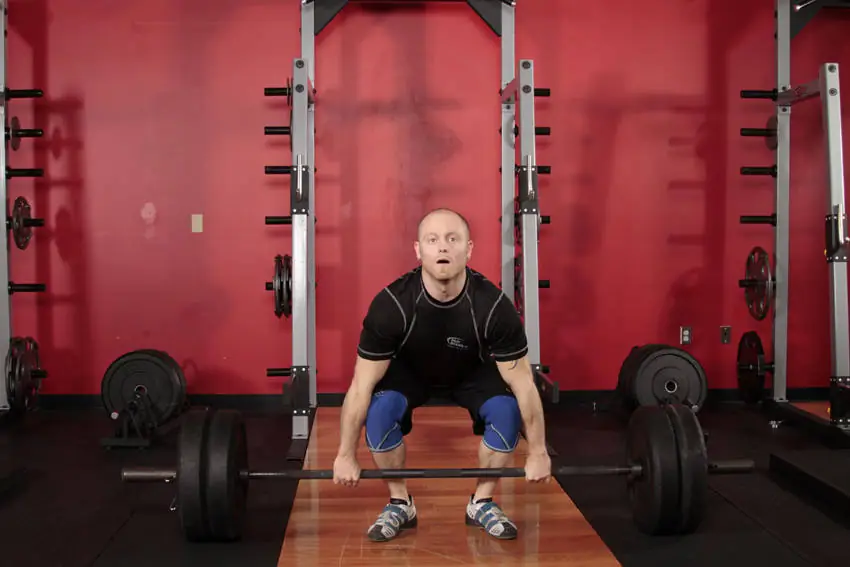
Think of this as the clean's responsible older sibling — same family, same DNA, but a little more straightforward and a lot less chaotic. You stand with the barbell against your shins, feet planted directly under your hips with toes turned slightly outward like a penguin who found confidence. You grip the bar with a double overhand or hook grip at about shoulder width, crouch down, and set your spine into full extension. Your shoulders sit in front of the bar, and your back is as vertical as you can manage while still looking like a human and not a flamingo.
From there, you drive through the front of your heels like you're trying to push the floor into the basement. The bar rises, and here's the crucial part: your back angle doesn't change. It stays locked. You're not doing a good morning impression — your back is a rigid plank while your legs do the lifting. Your knees track outward as the bar slides up, clearing the way like polite traffic.
Once the bar passes your knees, you finish the job by driving your hips forward until both your hips and knees are fully extended. Boom. You've just done a clean deadlift — the strength-building backbone (pun absolutely intended) of Olympic weightlifting. It builds the posterior chain — hamstrings, glutes, and erectors — with the specific mechanics needed for the full clean. It's beginner-accessible because there's no catching, no dropping under the bar, and no complicated timing. Just pull, stand, repeat. Simple, effective, and humbling when you realize how much stronger Olympic lifters are than you.